Products

Products2025-10-16T01:20:00+00:00
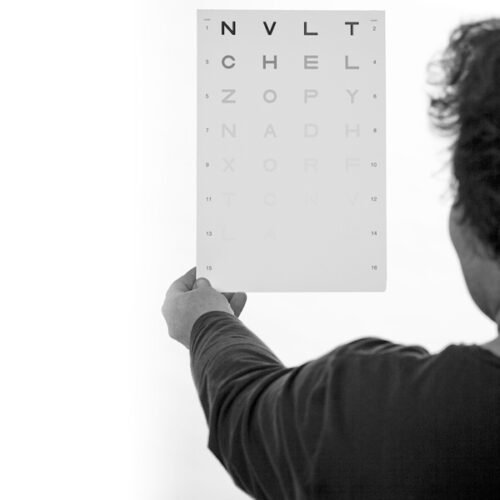
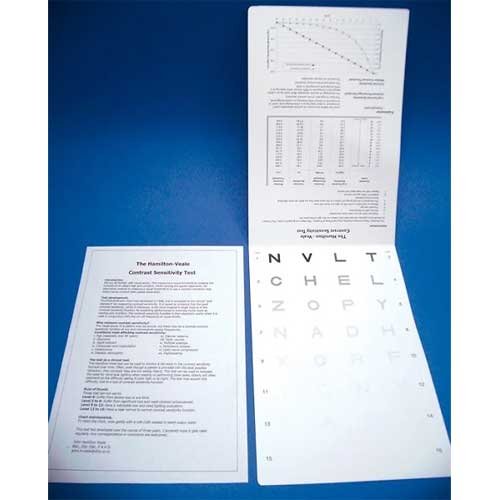
  • Hamilton-Veale Contrast Sensitivity Test This easy and convenient test can be used to monitor a decrease on the contrast sensitivity function over time. This test also demonstrates the difficulty of seeing in poor lighting or at night.
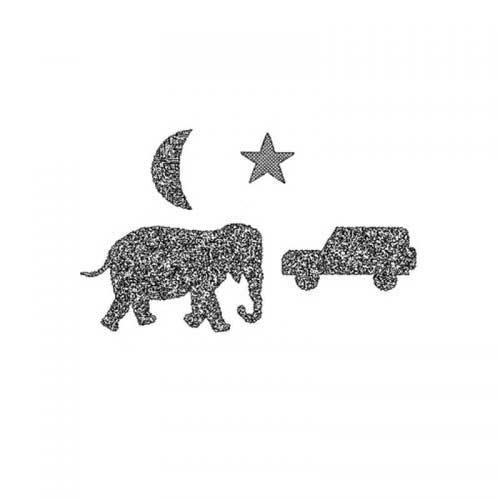
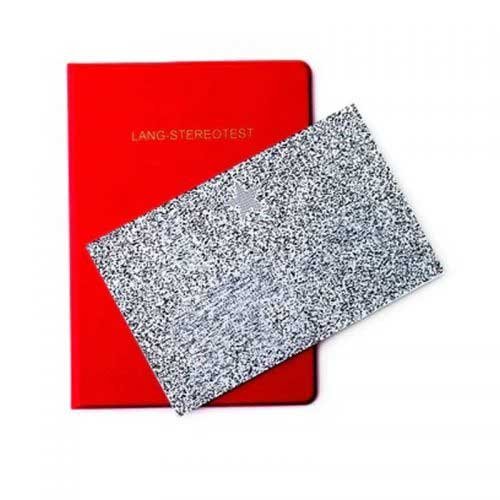
  • The Lang-Stereotest® II is used to test binocular spatial vision (stereopsis) in infants, children and adults.
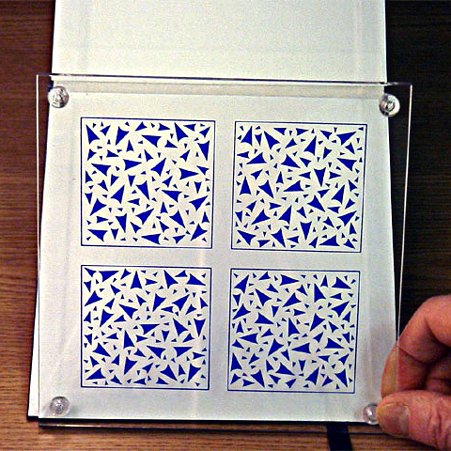
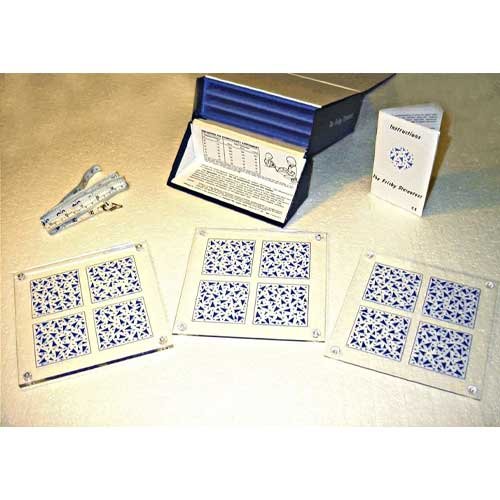
  • All Frisby Stereo Test Present "real depth" objects viewed with natural vision: not testing glasses are required. Each plate has four random-patten squares, with a circle of pattern elements, lying in depth relative to its surround. The depth effect is due to the circle and its surround being printed on opposite sides of the plate. The purpose of the Frisby Screening Stereo Test - Single Plate, is to demonstrate the presence of stereopsis.
  • All Frisby Stereo Test Present "real depth" objects viewed with natural vision: no testing glasses are required. Each plate has four random-pattern squares with a circle of pattern elements lying in depth relative to its surround. The depth effect is due to the circle and its surround being printed on opposite sides of the plate. The Frisby Stereo Test has 3 plates allowing for testing stereo acuity disparity as fine as 15 seconds of arc.
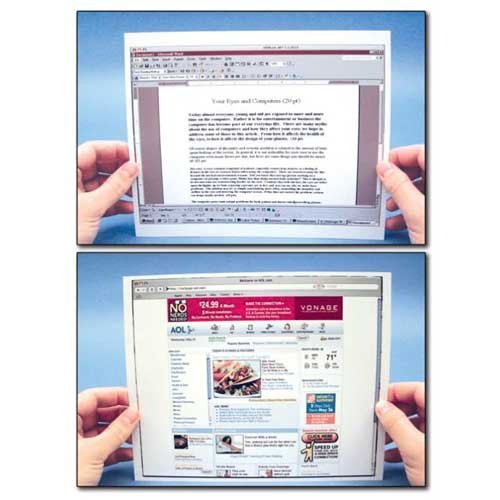
  • CRT Card Test Specifically designed for computer operators who require corrective multi-focal eyewear. Card may be placed at different heights and distanced to simulate the complete computer screen. Card is printed two sides -one side shows a computer screen with AOL. The other (Pictured) shows a Microsoft Word document with different fonts. Simulates a 15" computer monitor with shiny screen. has intentional errors to show red/green highlights.
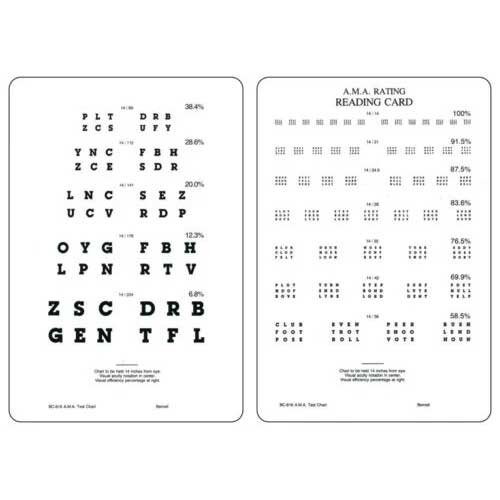
  • This much requested Near Acuity Card was originally developed by the American Optometric Association.
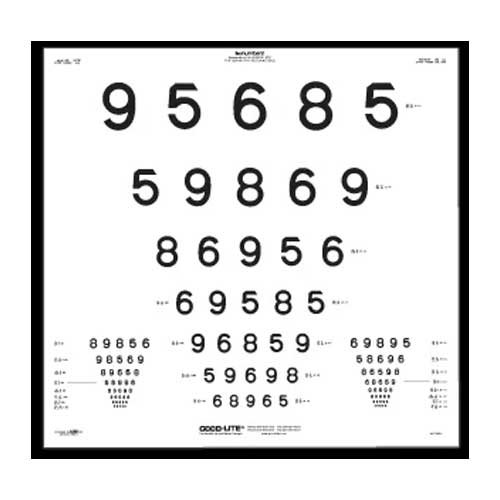
  • Adult LEA NUMBERS® chart for ETDRS Illuminated light boxes. Fits all existing ETDRS cabinets including both the ESV3000 and ESC2000. LEA NUMBERS® ETDRS chart contains optotypes in proportionally spaced (logMAR) lines; lines range from 20/200 to 20/8 (6/60 to 6/2.4) equivalent, 0.10 to 2.50. Fits in ESV3000 ETDRS illuminated cabinet.
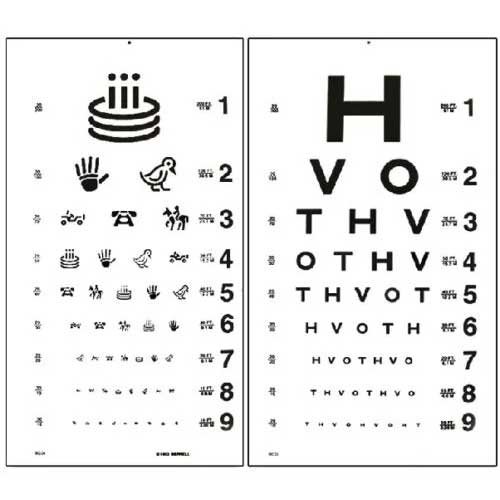
  • This test for illiterate patients has HOTV letters on one side and Allan figures on the other. Can be used with HOTV near card for matching with non-verbal patients. 21.5" x 11.5"
  • This test for illiterate patients has HOTV letters on one side and Allan figures on the other. Can be used with HOTV near card for matching with non-verbal patients. 21.5" x 11.5"
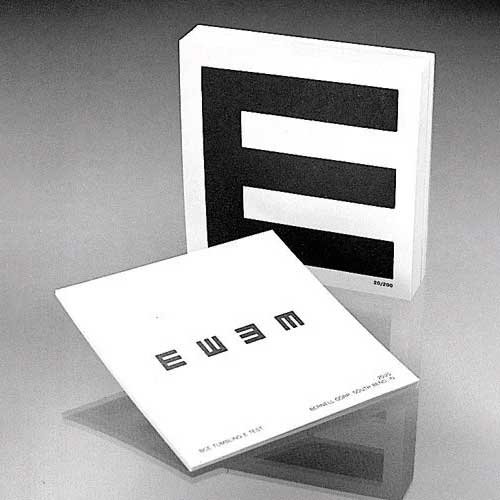
  • Tumbling E Pad (Pad of 100) Printed with large 20/200 E on one side and a series of five 20/20 tumbling Es on the other- calibrated to a 20ft. distance. May be used to test and train peripheral awareness.
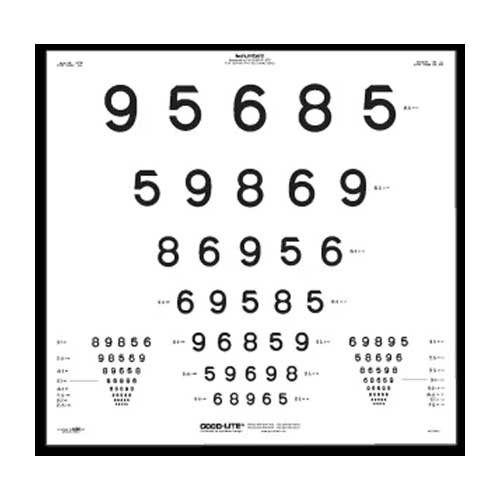
  • Adult LEA NUMBERS® chart for ETDRS Illuminated light boxes. Fits all existing ETDRS cabinets including both the ESV3000 and ESC2000. LEA NUMBERS® ETDRS chart contains optotypes in proportionally spaced (logMAR) lines; lines range from 20/200 to 20/8 (6/60 to 6/2.4) equivalent, 0.10 to 2.50. Fits in ESV3000 ETDRS illuminated cabinet.
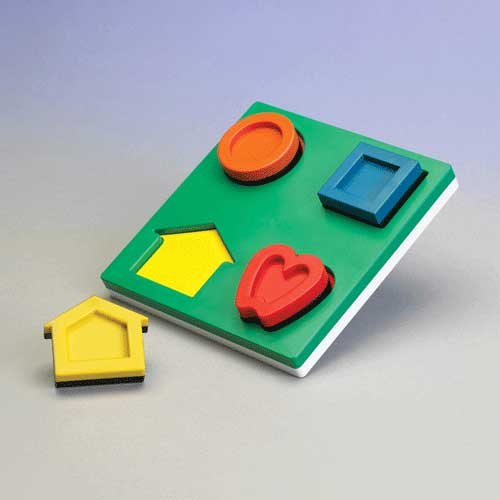
  • The LEA Puzzle is designed for training and assessing typically developing toddlers and other young children. The puzzle also serves as an assessment tool for individuals with brain damage or for older children and adults with low cognitive abilities. The goal in the play training of toddlers and young children is to help them develop the concept of same/different as a prerequisite for early measurement of visual acuity.
Go to Top