-
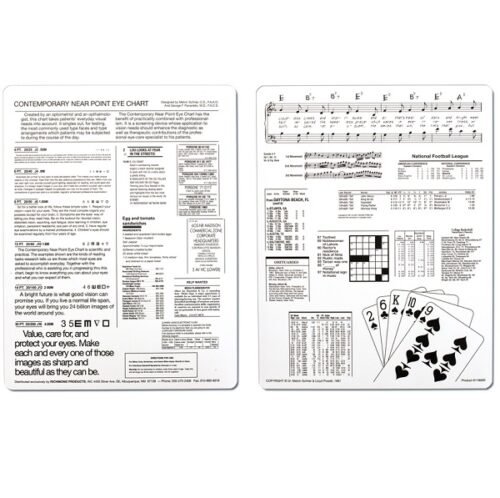 This sturdy 8.5" x 11" chart was created by an MD and OD to show most common task using your eyes. It can be used to screen for visual difficulties as well as demonstrate needs. Good for use in the exam room as well as the workup and dispensing rooms.
 -
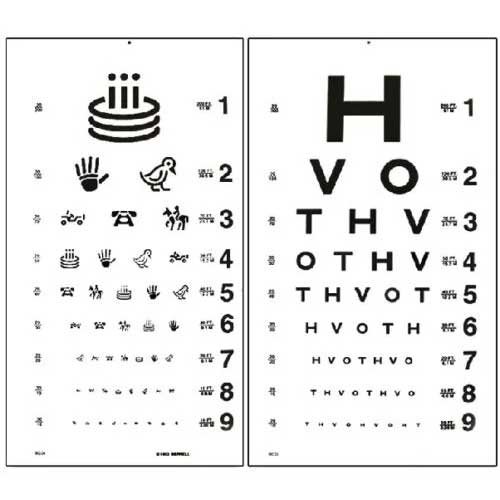 This test for illiterate patients has HOTV letters on one side and Allan figures on the other. Can be used with HOTV near card for matching with non-verbal patients. 21.5" x 11.5"
 -
This test for illiterate patients has HOTV letters on one side and Allan figures on the other. Can be used with HOTV near card for matching with non-verbal patients. 21.5" x 11.5"
-
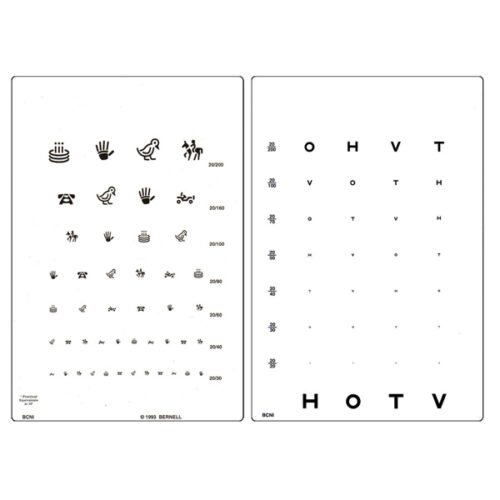 This card is ideal for testing illiterate patients. It has HOTV letters on one side and Allen figures on the other. CARD SHOULD BE HELD AT 16" 5" x 8" BCNIE comes with 16" elastic cord to verify testing distance.
 -
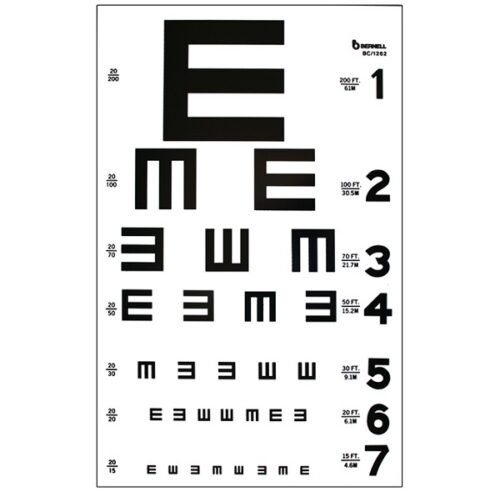 9" x 14" TRANSLUCENT PLASTIC MAY BE USED WITH ILLUMINATED TEST CABINET OR AS A WALL CHART 20/200 to 20/15. Item #: BC1262
 -
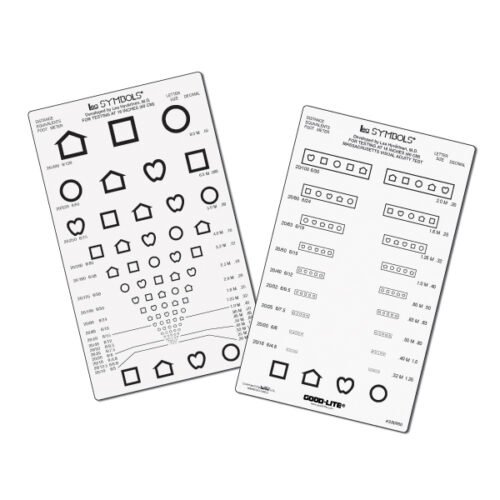 Pediatric near vision card featuring LEA Symbols pediatric symbols for testing children or illiterate adults at 16" (40 cm). It's small size makes it easy to carry or store. Front side contains proportionally-spaced lines in logarithmic progression with line sizes ranging from 20/400 to 20/10 (6/120 to 6/3) equivalent. The reverse side features pediatric symbols in 50% spaced rectangle (Massachusetts Visual Acuity Test format). Line sizes range from from 20/100 to 20/16 (6/30 to 6/4.8).
 -
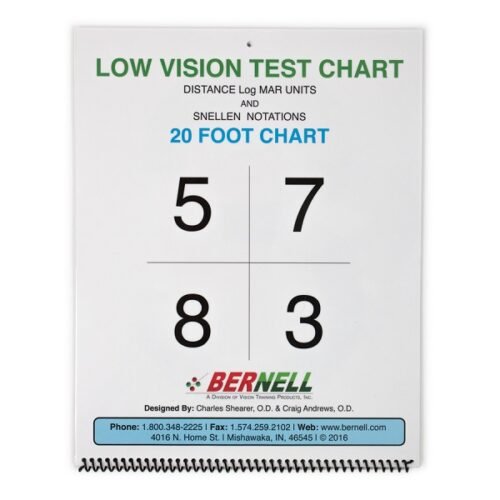 Designed by two low vision doctors. This chart has a 20/630 size number as well as numbers & tumbling "E's" that are 20/500, 20/400, & 20/317 sizes. These take the memory out of acuity testing. The 20/250 page & below have four numbers of the same size. This allows you to test each eye individually without concern for memoriztion. Also, by observing which number is seen first, the tester can decide which part of the field has the best fixation. Chart lists size by logmar & Snellen equivalent to 20/20.
 -
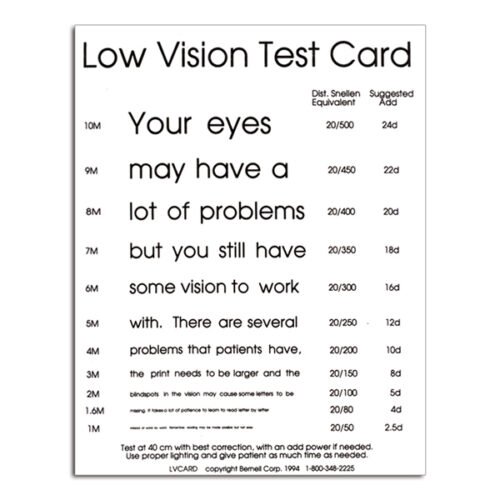 Features both upper and lower case letters to test near visual acuity in low vision patients. Appropriate starting high plus add power or magnifier power is indicated to the right of the line of copy the patient is able to read.
 -
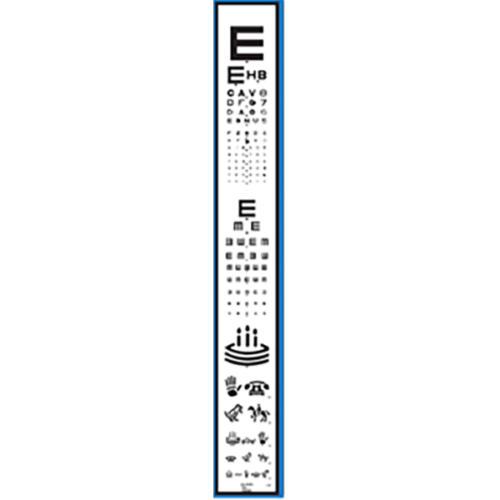 Designed for use in manual Chart Projectors including products from: R.H. Burton, Marco, Reichart, Topcon, and Woodlyn. Includes test for: → Sloan Letters 20/400 – 20/15 (15 Lines) → Tumbling E 20/200 – 20/25 (9 Lines) → Allen Acuity 20/200 – 20/30 (6 Lines) Item #: VA1192
 -
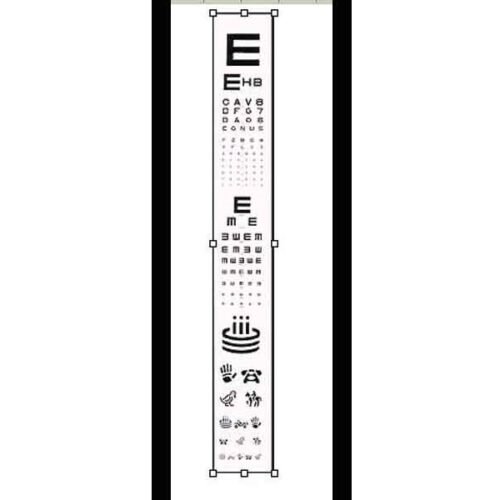 Projector Slide Replacements MultiAcuity Projector Slide Letter Acuity, Tumbling "E", Allen Figure Test This family of projector slides are designed for testing all ages. Made of high quality photographic film, sealed between two pieces of glass to ensure sharp optotypes to maintain the integrity of your exam. Each slide must be adjusted for use on different length testing lanes.
 -
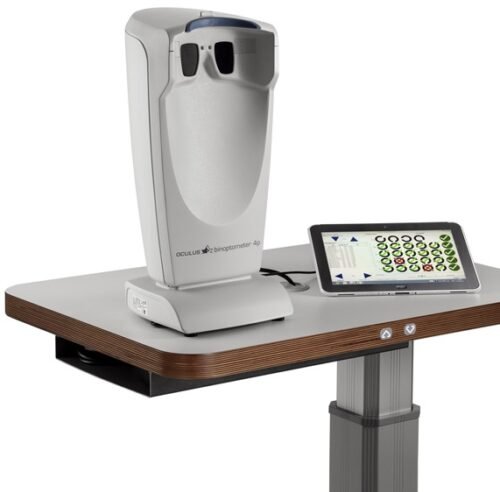
 The OCULUS Binoptometer® 4P is a professional screening instrument for testing all relevant visual functions. The used future-oriented technology allows an almost unlimited representation of various vision tests. Vision-screening instrument with contrast sensitivity testing and optional mesopic vision and glare sensitivity testing.
New Test Presentation
Vision tests are presented on a high-resolution micro-color display, allowing a virtually unlimited presentation of vision tests.Unbeatable
Contrast sensitivity, optional mesopic vision and glare sensitivity testing with just one instrument.Ergonomic
Convenient height adjustment range of 4.13 inch (10.5 cm). In addition, the viewing angle is fully adjustable up to a 35° downgaze, thus enabling testing to be done ergonomically with any eyeglasses. -
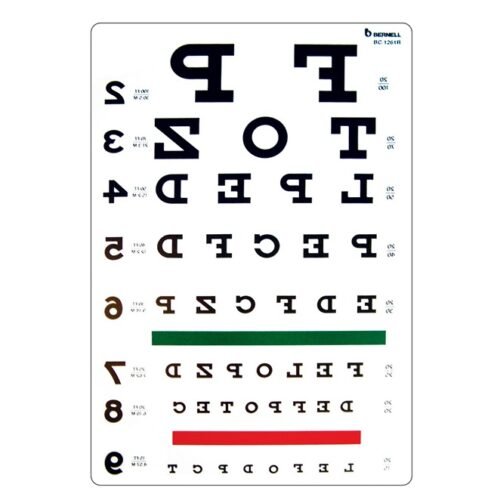 This chart functions as a 20' test when space is limited. Use in 10' room with mirror. 20/100 size. Chart size 9" x 14". Item #: BC1261R
