-

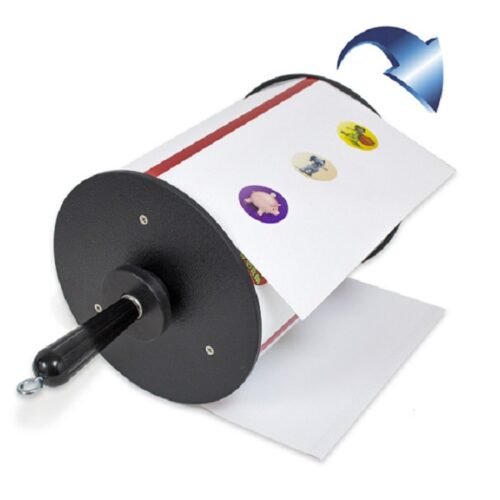 Sized to fit over our Adult Optokinetic Drum (DAL300) this vinyl sheet is used to test for the optokinetic reflex. The banner has child interest targets similar to our DAL301. Can be rolled up for easy storage. Clear end pieces hold banner from curling. Washable plastic material similar to window shade. Velcro on backside of the banner allows for easy attachment around the Adult Optokinetic Drum (DAL300). Item #: OKNADP1
 -
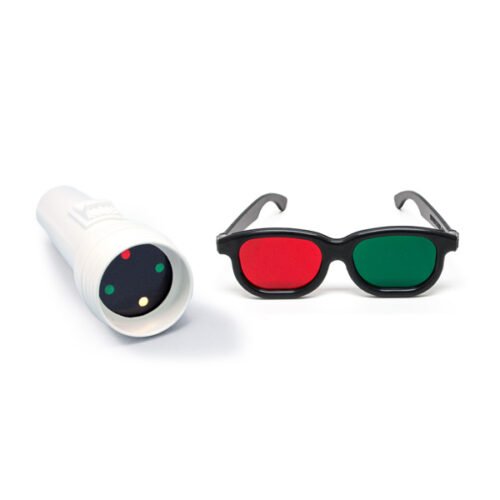 Worth 4-Dot Test Flashlight Used for testing and training of fusion, suppression, and/or diplopia. Red/Green goggle included. Requires 2 C batteries (not included).
 -
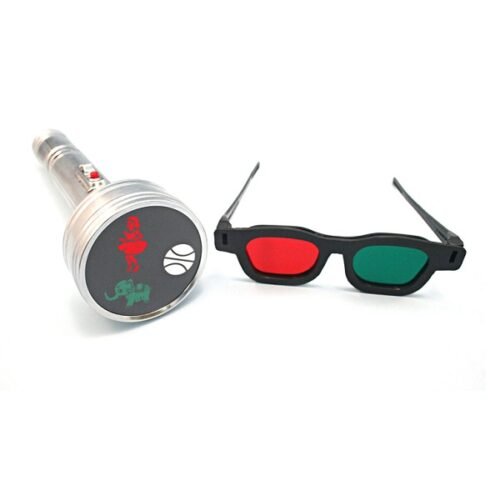 Three Figure Worth Type Test This test is used for determining diplopia, suppression or fusion in children. Sturdy flashlight comes with red/green glasses. Chrome 8" long flashight with 3" extension included. Requires 2 to 3 D batteries depending on the handle length. Not Included.
 -
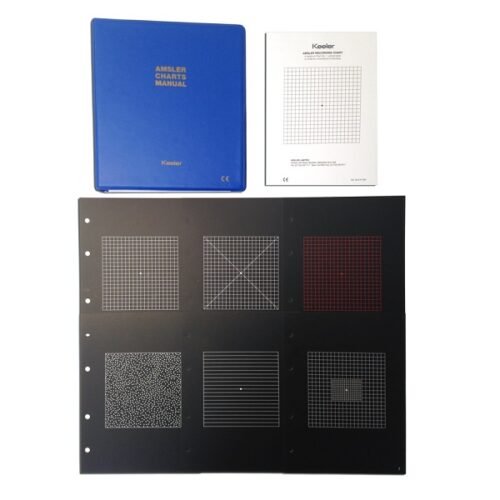 Amsler Chart Book Test for metamorphopsia, maculo-pathy and retino-pathy. Imported from England Includes six grids as pictured Instructions Included 5-1/2" x 8-1/2"
 -
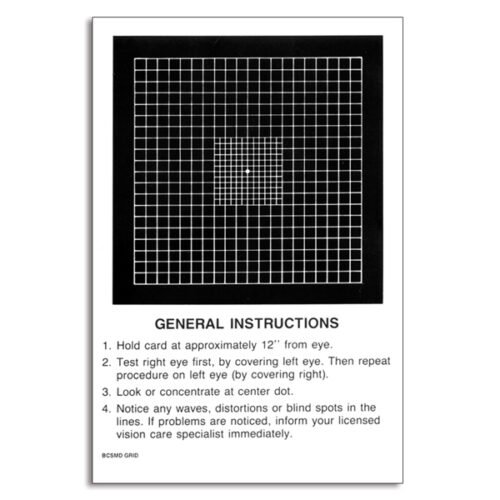 Refined Central Amsler Grid Amsler grid pad with additional lines at the central fixation point for testing and monitoring macular problems. Pad of 50 sheets
 -
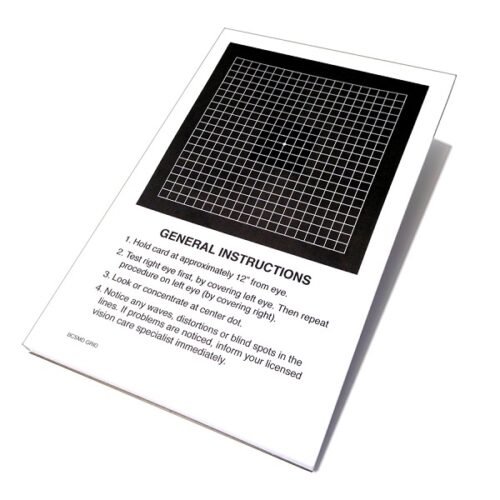 ARMD Test Pad Amsler grid pad for testing and monitoring macular problems. Ideal for patients to take home. Heavy, non-wrinkle paper Pad of 50 sheets
 -
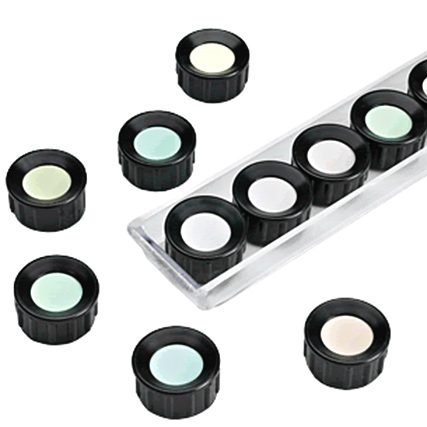 Anthony 15 Hue-Test Desaturated Test revels color blindness by using light hues. Diagnoses abnormal congentia, trichromats, and dyschromatopsia.
 -
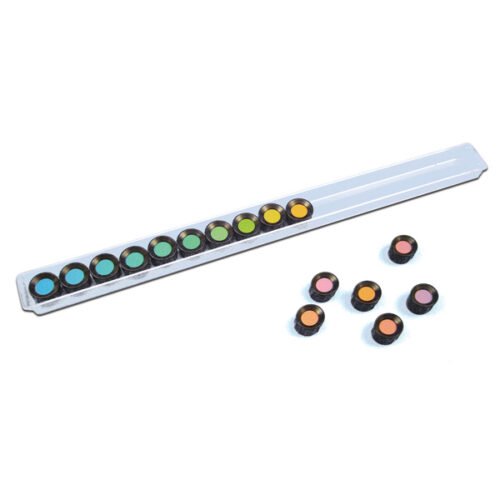 Farnsworth D15 Dichotomous Color Test Farnsworth Test for Congenital and Acquired color defects. The Farnsworth D-15 contains a reference disc holding notation 10 B 5 4 and fifteen numbered discs which make up an incomplete color circle. The patient arranges the discs and then evaluation of the patients arrangement separates 'normal' color perception from moderate and strong defects in deutan, protan or tritan axis color discrimination. The D-15 is housed in a plexiglass container. the disks are spread out on a table and arranged by the patient. The Farnsworth D-15 test is a subset of the well known Farnsworth 100 Hue Test. It is intended for classification instead of in-depth study of color vision defects. The D-15 and 100 hue tests are correlated. Growing Importance of Color deficiency Screening. In addition to congenital color deficiency screening there is growing evidence that adult acquired color deficiency, especially in yellow and blue perception, can indicate medical toxicity and other problems. Increasingly complex security and medical systems also require verification of all three types of color receptors. How the D-15 test works: The Farnsworth D15 is called 'dichotomous' because it is designed to separate subjects into one of two groups, 1) Strongly color deficient or 2) Mildly color deficient or color normal. This is accomplished by the arrangement of vivid (saturated) colored discs. A perfect score shows normal color perception. A non-perfect score is used to determine a medium or strong color deficiency.
 -
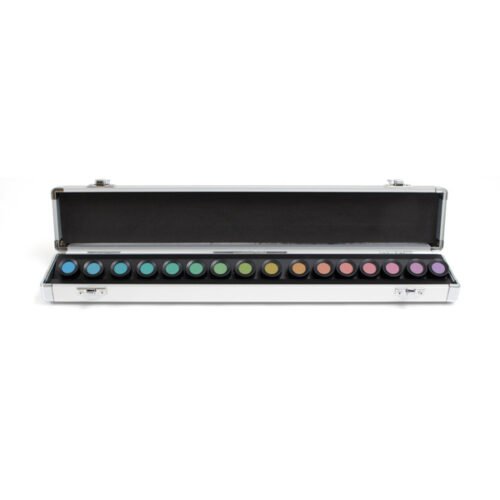 Farnsworth Test for Congenital and Acquired color defects. The Farnsworth D-15 contains a reference disc holding notation 10 B 5 4 and fifteen numbered discs which make up an incomplete color circle. The patient arranges the discs and then evaluation of the patients arrangement separates 'normal' color perception from moderate and strong defects in deutan, protan or tritan axis color discrimination. The disks are spread out on a table and arranged by the patient. The Farnsworth D-15 test is a subset of the well known Farnsworth 100 Hue Test. It is intended for classification instead of in-depth study of color vision defects. The D-15 and 100 hue tests are correlated. Growing Importance of Color deficiency Screening: In addition to congenital color deficiency screening there is growing evidence that adult acquired color deficiency, especially in yellow and blue perception, can indicate medical toxicity and other problems. Increasingly complex security and medical systems also require verification of all three types of color receptors. How the D-15 test works: The Farnsworth D15 is called 'dichotomous' because it is designed to separate subjects into one of two groups, 1) Strongly color deficient or 2) Mildly color deficient or color normal. This is accomplished by the arrangement of vivid (saturated) colored discs. A perfect score shows normal color perception. A non-perfect score is used to determine a medium or strong color deficiency.
 -
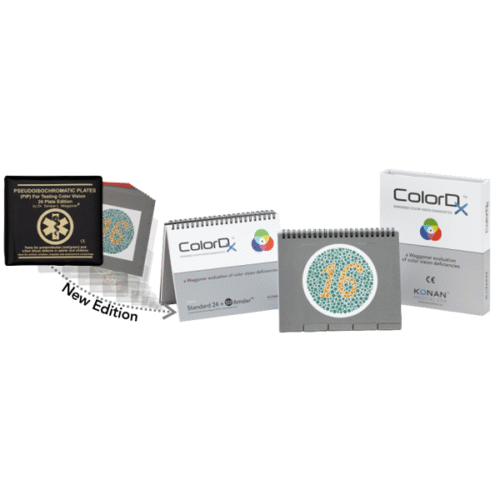 Same great test as before, but with a new and improved package! One of only two color vision tests validated and required for Naval Aviators. ColorDx is new brand identity for the proven Waggoner six confusion-color strategy used by physicians, Ophthalmologists, Optometrists, and nurses worldwide. This military grade test is used by the US Army and for FAA annual flight physicals requiring color vision testing and has been independently validated by both academic institutions and military services. This new edition features enhanced digital colorimetery production methods, durable page and binding materials, and magnetic light-protective storage case. The ColorDx Standard 24 is designed and licensed from color vision expert Dr. Terrace Waggoner and is the newest edition of the Waggoner PIP-24 (PIPIC 24).
 -
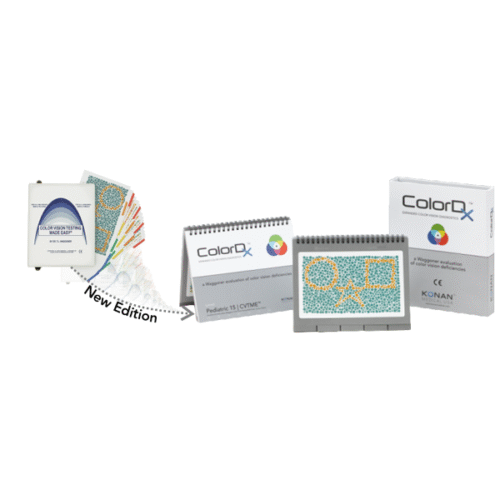 Same great test, but in a new and improved package! The ColorDx Pediatric 15 is the newest version of Color Vision Testing Made Easy or CVTME. As the Gold Standard pediatric assessment of color deficiencies or color blindness See The Multi-Ethnic Pediatric Eye Disease Study published by the AAO, CVTME™ is used in over 40 countries and has been validated for illiterates at the US Special Olympics. Featuring the proven Waggoner six confusion-color strategy, the pediatric test is used in a broad range of settings: pediatrics, eye physicians, school nurses, and many other disciplines of health care, in any language, world-wide. This easy to administer test features both hidden and non-hidden shapes that allow for positive reinforcement even while testing color deficient children by allowing successful answers on most targets. This success-reinforced strategy is also useful for assessment of malingering. Designed by color vision expert Dr. Terrace Waggoner, this new edition features enhanced digital colorimetery production methods, durable page and binding materials, and magnetic light-protective storage case and enhanced digital colorimetery production method and durable page materials and binding. Brilliantly simple to take, easy to score and just plain fun for children.
 -
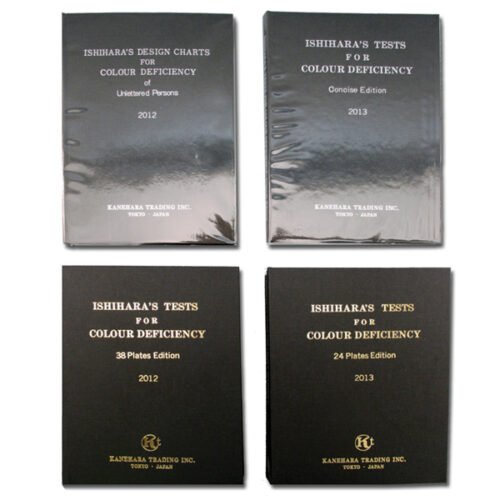
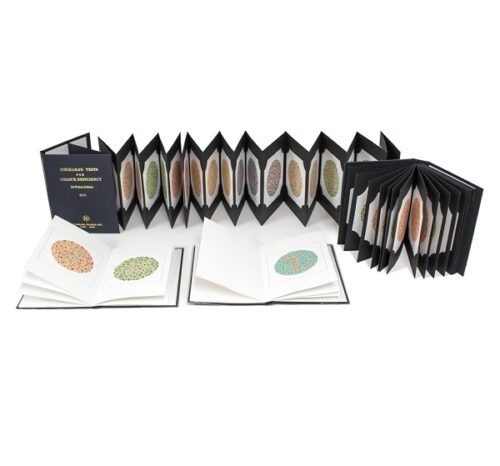 Ishihara Pseudo-Isochromatic Test The most widely used standard of color vision screening in a book form. Instructions Included.
