-
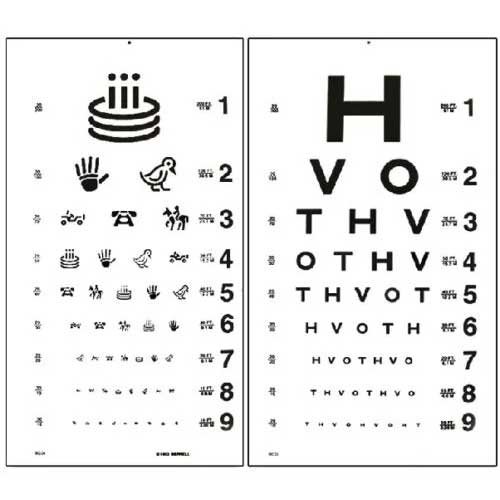 This test for illiterate patients has HOTV letters on one side and Allan figures on the other. Can be used with HOTV near card for matching with non-verbal patients. 21.5" x 11.5"
 -
This test for illiterate patients has HOTV letters on one side and Allan figures on the other. Can be used with HOTV near card for matching with non-verbal patients. 21.5" x 11.5"
-
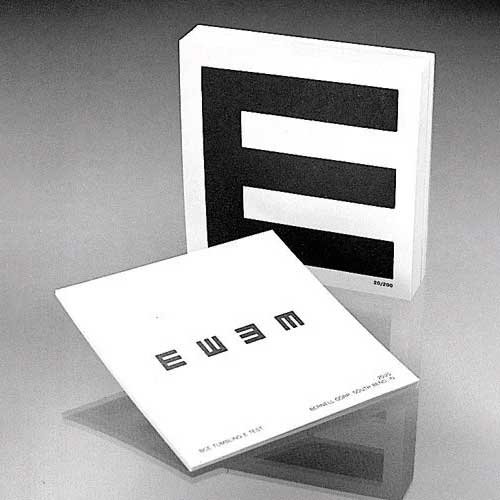 Tumbling E Pad (Pad of 100) Printed with large 20/200 E on one side and a series of five 20/20 tumbling Es on the other- calibrated to a 20ft. distance. May be used to test and train peripheral awareness.
 -
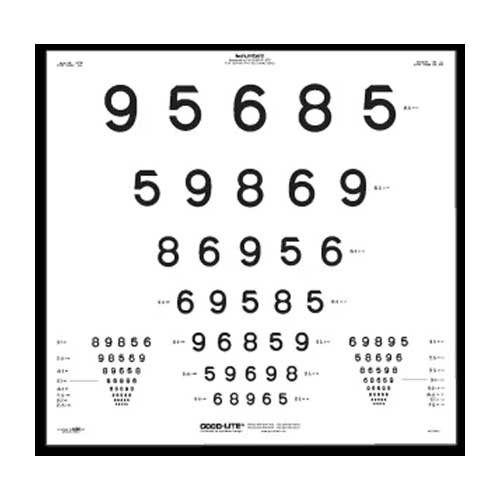 Adult LEA NUMBERS® chart for ETDRS Illuminated light boxes. Fits all existing ETDRS cabinets including both the ESV3000 and ESC2000. LEA NUMBERS® ETDRS chart contains optotypes in proportionally spaced (logMAR) lines; lines range from 20/200 to 20/8 (6/60 to 6/2.4) equivalent, 0.10 to 2.50. Fits in ESV3000 ETDRS illuminated cabinet.
 -
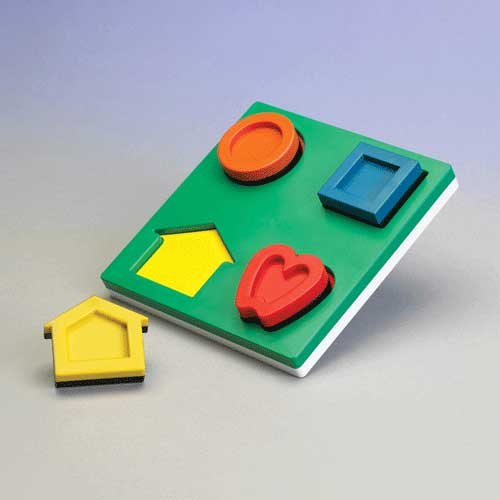 The LEA Puzzle is designed for training and assessing typically developing toddlers and other young children. The puzzle also serves as an assessment tool for individuals with brain damage or for older children and adults with low cognitive abilities. The goal in the play training of toddlers and young children is to help them develop the concept of same/different as a prerequisite for early measurement of visual acuity.
 -
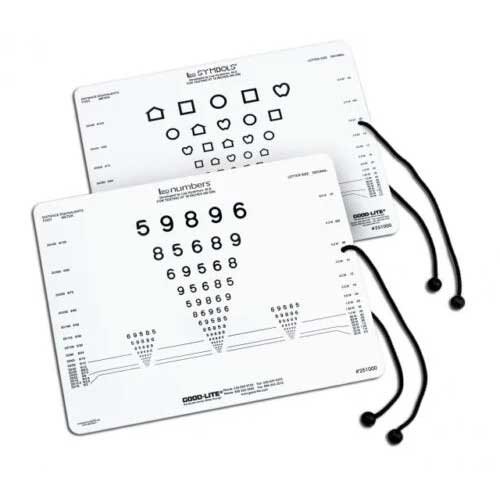 This cards combines a LEA Symbols® line test on one side and a LEA Numbers® line test on the opposite side. Proportionally-spaced lines from sizes 20/400 to 20/10 (6/120 to 6/3) equivalent. Attached 16-inch (40cm) cord ensures proper testing distance. Response key printed on test card. Flash cards and instructions included. 8" x 10" (20.3 cm x 25.4 cm).
 -
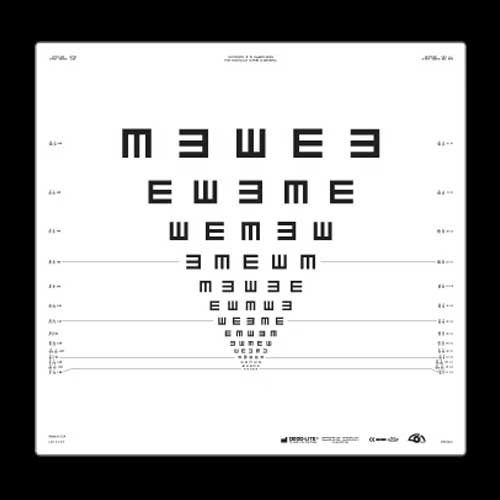 Illiterate Tumbling E ETDRS vision chart with proportionally spaced (geometric progression) lines; line sizes range from 20/200 to 20/10 (6/60 to 6/3) equivalent.
 -
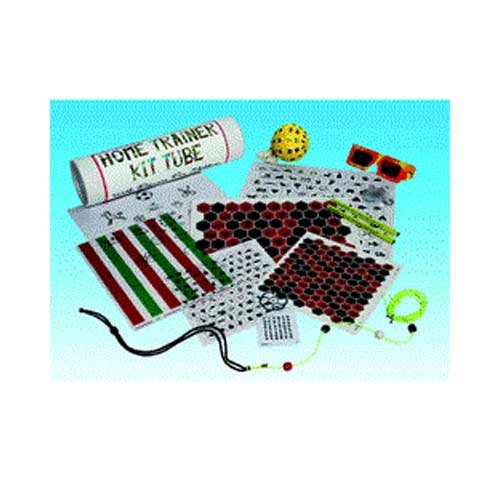 Home Trainer Kit Tube (VTE) for Children The tube contains a selection of products for children's home VT.
 -
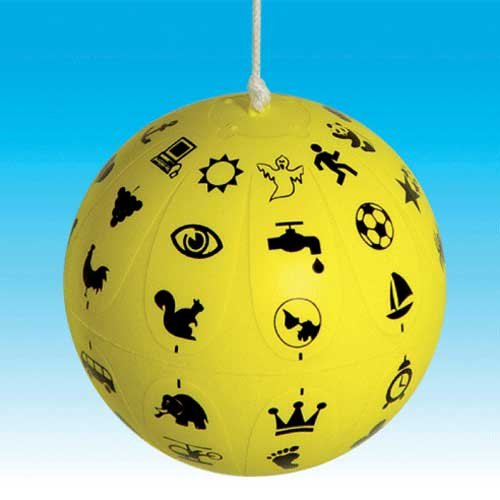 Ball with 60 children's figures. Each ball includes plastic adhesive hook for hanging up.
 -
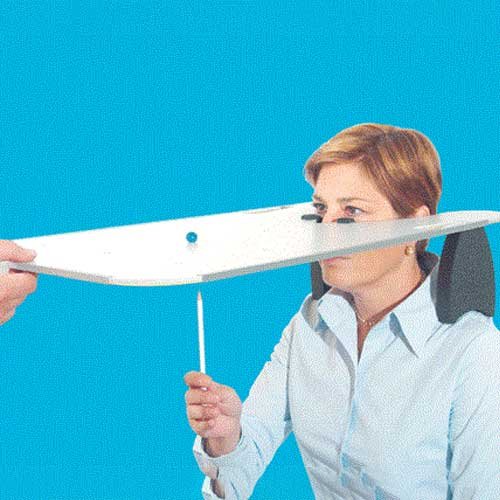 The Spatial Board was suggested by Dr. Streff as a way of quantifying and recording spatial localization shifts with patients. Dr. Kraskin utilized similar assessments of a patient's spatial localization in order to determine the amount and direction of yoked prisms to prescribe. The VTE Spatial Localization Board is designed for clinical efficiency to allow the behavioural optometrist to quickly assess a patient's spatial localization in real space and time; determine x, y and z axis spatial warps in 9 primary meridians; record patient responses for pre and post test data (especially good for documenting mid-line shifts in TBI and strabismic patients) and quantify immediate effects of lenses and prisms.
 -
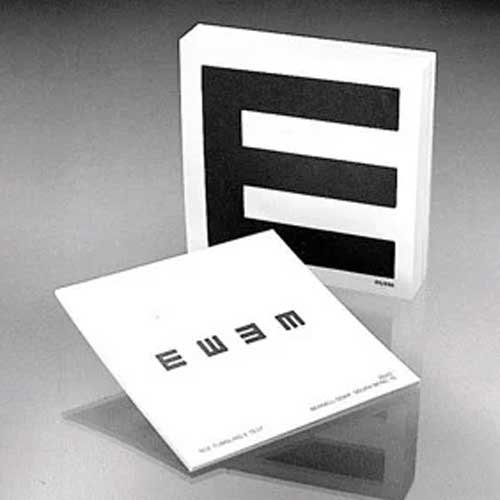 Tumbling E Pad (Pad of 100) Printed with large 20/200 E on one side and a series of five 20/20 tumbling Es on the other- calibrated to a 20ft. distance. May be used to test and train peripheral awareness.
