-
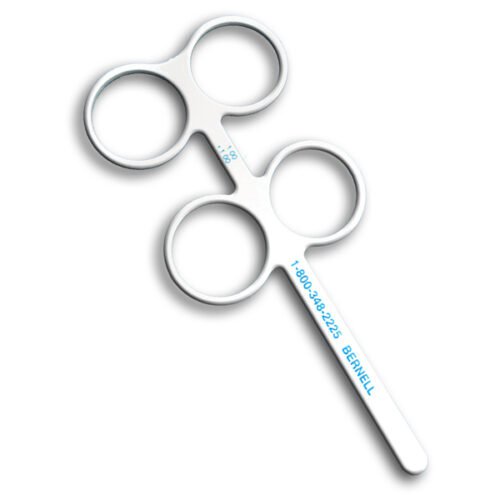 Test and train for accommodative facility, accommodative rock, positive/negative relative accommodation and convergence and fusional convergence reserves. May delay bifocal use with some early presbyopes. Assists in hyperopia screening and lens demonstrations. Durable, white plastic holds shape under low heat for lens insertion. Powers listed on handle. One pair plus; one pair minus. Select from +/- 0.25 to 4.00 diopters in 0.25 increments. Item #: BC1270+
 -
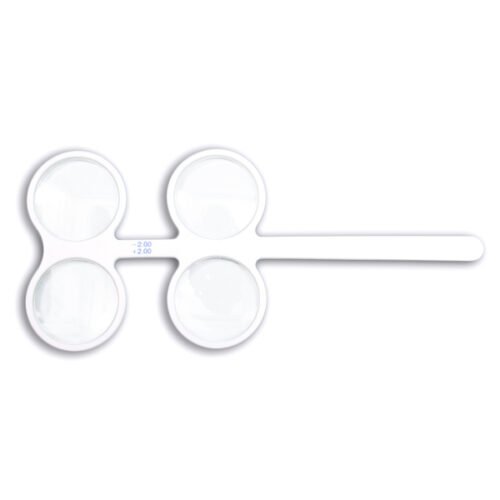 Our Accommodative Flipper without the Bernell Imprint Test and train for accommodative facility, accommodative rock, positive/negative relative accommodation and convergence and fusional convergence reserves. May delay bifocal use with some early presbyopes. Assists in hyperopia screening and lens demonstrations. Durable, white plastic holds shape under low heat for lens insertion. Powers listed on handle. One pair plus; one pair minus. Select from +/- 0.25 to 4.00 diopters in 0.25 increments. Item #: BC1270NI+
 -
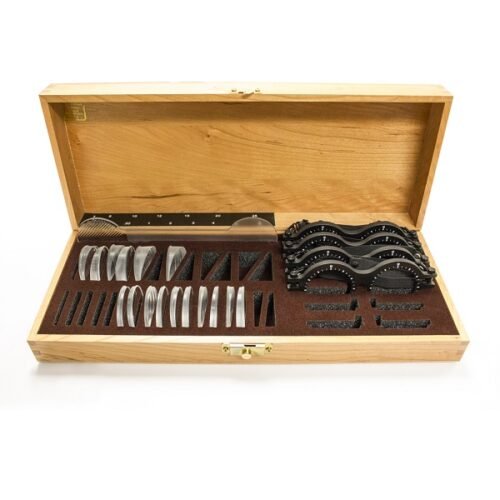
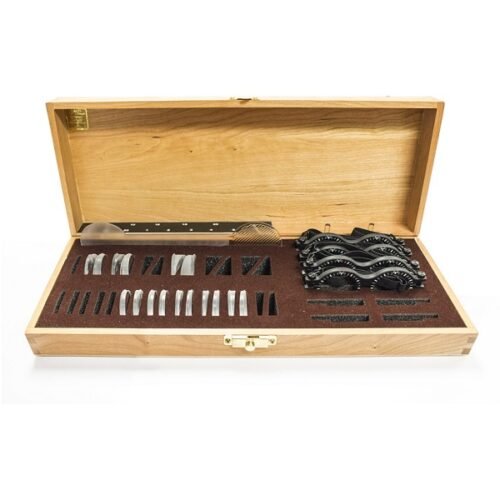 Kit Includes: (16) flat prisms, (4) standard frames, & Maddox Rod with translucent occluder in a wooden case. Kit has empty spaces for future expansion! Note: Prism diopter powers are listed per lens. For example, a 4PD goggle will have two 4PD lenses to make a 8PD range. So, 4PD goggle = 8PD range. Item #: 1138KIT16+
 -
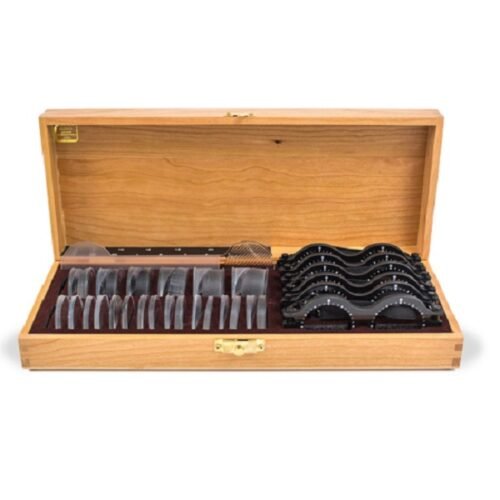
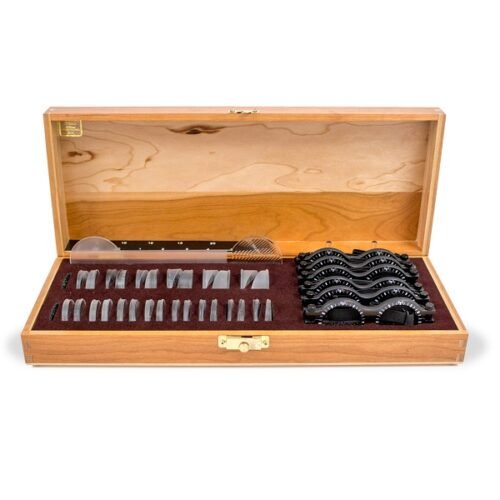 Deluxe Kit has (28) prisms, (6) frames, & Maddox Rod in a wooden case with pre-cut foam to keep prisms safe & clean. Note: Prism diopter powers are listed per lens. For example, a 4PD goggle will have two 4PD lenses to make a 8PD range. So, 4PD goggle = 8PD range. Item #: 1138KIT28+
 -
 Yoked Empty Rotating Prisms (VTE) Plastic frame with nasal anatomical fit for children. Blue and Red Colors Item #: E/FRRYPC
 -
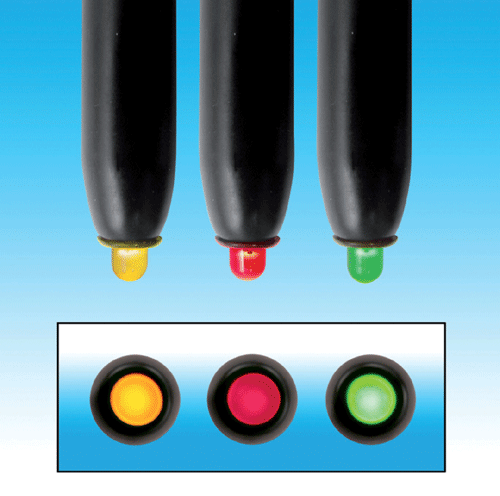 Set of LED pen-light: green, red, yellow. Non-glare lights, useful to perform: corneal reflex, cover test, ocular motility, fixations, diagnostic and training procedures. Sold in set of 3 Vision Light. Batteries (1.5 V) are not enclosed Item #: E/VL
 -
 This handheld circular pupillometer device is used for measuring different size pupils. It was developed and researched by Dr. Jack Richman, O.D., as part of the Massachusetts Drug Evaluation and Classification Program (MDEP). This pupil measurement device is used by law enforcement officers across the country to assist in determining whether people are possibly impaired and/or under the influence of drugs. The reverse side has expected pupil size in different lighting conditions for non-impaired people. Item #: LV3553000
 -
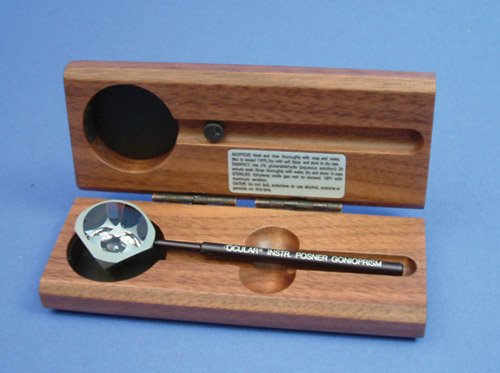
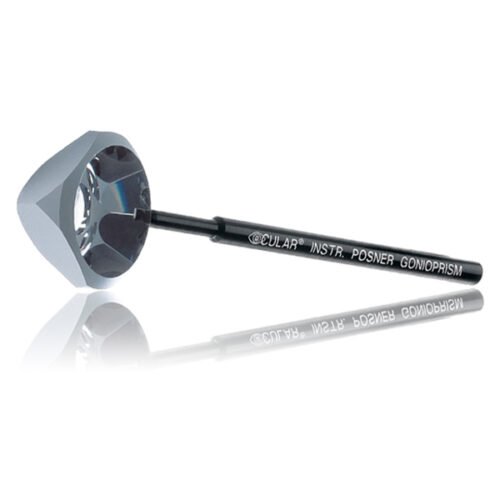 Ideal for use with children or patients with a small palpebral fissure. The instrument consists of a highly polished truncated silver surfaced pyramid with a plane anteroir viewing surface over four mirrors. An aluminum handle set at 35 degrees is bonded to one corner of the lens. The lens is used in the diamond position (45 degrees) resulting in fewer adjustments of lowering and elevating the slit beam with either hand. Item #: OCIOPDSG
 -
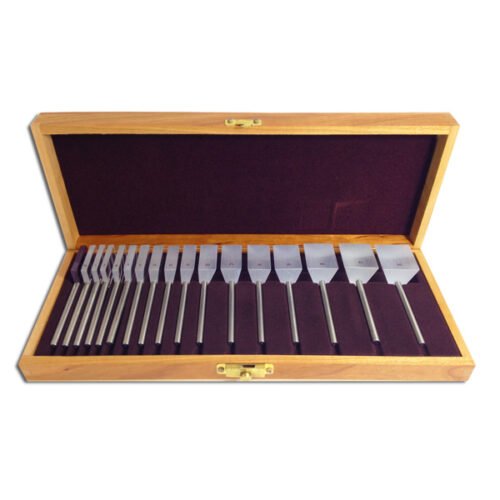 Stainless steel handles and a red filter on a stick are held in a felt lined case for convenience as well as scratch protection. Item #: ASPSSET+
 -
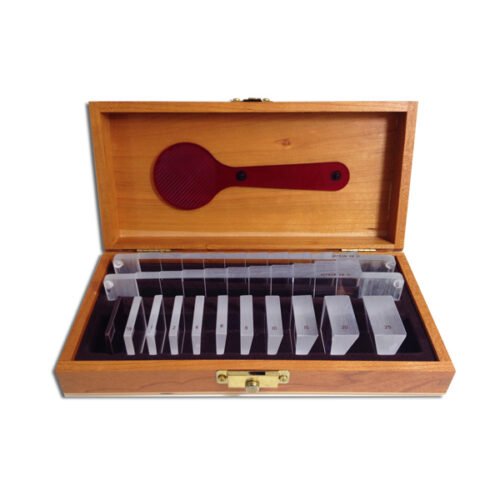 Basic prism set in handsome wood case, foam-lined for protection. Item #: APS30+
 -
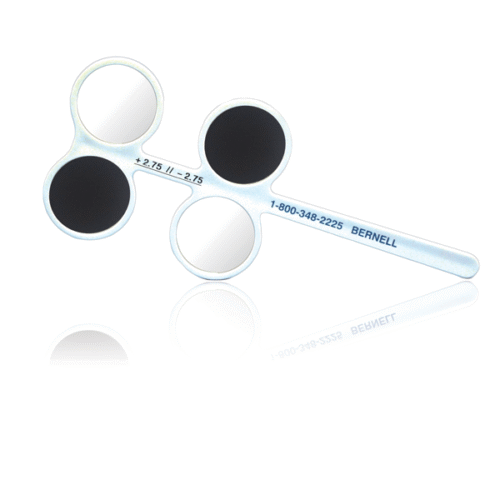 Has one plus lens with occluder. The reverse has a minus lens and occluder. Available in diopters 0.25 to 4.00 in +/-0.25 increments. These flippers are designed to allow for monocular training of accommodation without the need of a patch. Item #: BC1277+
 -
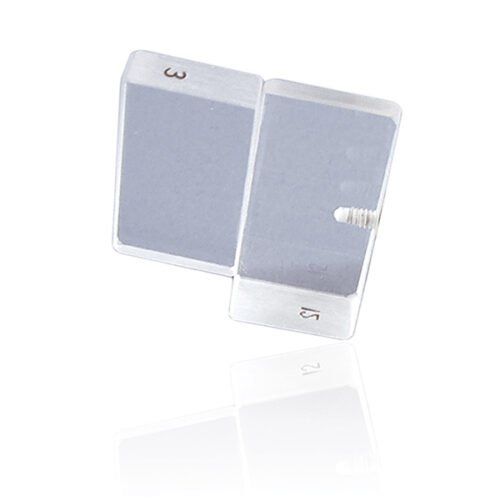
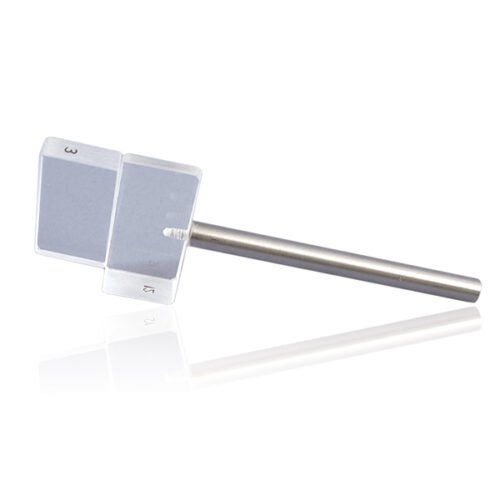 A good binocular screening device. Performed at a distance of 40 cm with a target of 20/30. Most normal patients can cycle between these prims 15/minute. Those with difficulty should be more thoroughly tested. 12D Base-Out and 3D Base-In. Prism is 1.5 inches square. Item #: G1110+
